Oral Communication
ORAL COMMUNICATION

face to face conversations
telephone conversations
debates
presentations
podcasts
TED talks
JUST TO NAME A FEW!!

 Today, I will be introducing you to three resources that will teach you about podcasts, and their benefits in the classroom. Also, the power of words and their effect in a classroom as well as how powerful words can be in a classroom.
The first resource is The Edublogger: The Edublogger's Guide to Podcasting. The author Kathleen Morris discusses how useful and easy podcasts are to implement in your classroom. For those who don't know, podcasts are audio files that are published online. It is similar to a radio show, (or television show that only has audio). They usually involve one person speaking on a topic, interview, or a panel of presenters discussing an issue. Podcasts may be the audio recording a video or lecture. Often times they are set up in the form of regular-season episodes. For example, a new episode might be released each week, but you can listen to it on your time, whenever convenient for you. If you have an apple device, you can access podcasts through the app itself, or there are others you can find in the app store. If you have an android device, there are numerous apps you can choose from. You can also listen to podcasts on websites as many podcasters will share through there.
PODCASTS ARE POPULAR BECAUSE...
THEY PROMOTE FLIPPED LEARNING,
CONTAIN VARIETY,
PROVIDE EASE
CATER TO LEARNING STYLES,
ANDDDDD
POSESSES FLEXIBILITY
How can Podcasts be used in education?
Two ways. Podcasts can be either consumed or created. To be consumed, all you have to do is search or browse the episodes you want to listen. Do this by looking for the search bar and type in the title of the podcast you are looking for, or keywords associated with the topic you are interested in. As mentioned in the language arts curriculum, "To develop their oral communication skills, students need numerous opportunities to listen and to talk about a range of subjects, including personal interests, school work, and current affairs" (Ontario 2006, p.9). To create your own podcast, all you will need is:
- a phone, tablet or computer
- an external microphone for better audio quality (or use built-in mic)
- simple software or app for recording
- a blog to post your podcast if you want
- an idea
To record, all you will need is a
- script
- quiet place to record
- software or app
All in all, podcasts are a fun and creative way to introduce and create oral communication with your students!
Click Here to access Edublogger
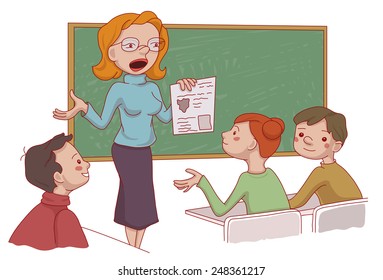
The second resource is an article titled Real Listening as Real Teaching by Carol Ann Tomlinson. She discusses her time observing a novice teacher, Dianne, display exquisite communicating and listening skills to her class. Dianne was a probing questioner, as she knew that every idea a student had, was the hallway to a richer idea. She regularly led her students down the hallway, never stopping at the gate of an idea. Dianne also possessed excellent listening skills. Any student that she was speaking with at the time had her one hundred percent divided attention. According to the language arts curriculum "This strand focuses on the identification and development of the skills and strategies
effective listeners and speakers use to understand and interact with others" (Ontario, 2006, p.10).
There was one time where during a class discussion on a short story, Tomlinson noticed that Dianne was no longer in the front of the class. What surprised Tomlinson was that the students had carried on the discussion as if the teacher had never left. What was even more shocking was that Dianne had taken a seat amongst her students in the middle of the classroom-a learner among learners. Tomlinson had a one on one conversation with a student in the class and he explained a situation where Dianne might have misinterpreted a concept. The student told Tomlinson that it wasn't a problem that he had to figure out the term on his own. The kid said "Ms. Tomlinson, for seven years, teachers have told us what to think. This teacher has shown us how to think. That's what matters here!" (Tomlinson, 2014).
Click Here to access Real Listening as Real Teaching
The third resource I will be sharing with you today is a children's podcast series called Short & Curly, that can be found on Soundcloud. The series has various episodes that have fast paced fun filled ethics podcasts for children and parents. Ethics can be a tricky subject to explain to kids, but having them listen to this podcast series may help them understand it more. Questions and ideas such as school, pop culture, technology, animals, and the future are present in the series. By listening to the podcast, children might be more inclined to grasp the information as opposed to just reading about it. Educating students in ethics allows them to be:
- exposed to different viewpoints
- expert critical thinkers
- prepared for post-graduate studies

Click Here to access Short & Curly Podcast


Comments
Post a Comment